
Breed Profile
A breed built on beauty, intelligence, and human closeness
A full guide to the European Burmese cat — character, care, breed types, history, and why the breeder matters.
A Companion Breed
More than a beautiful pet
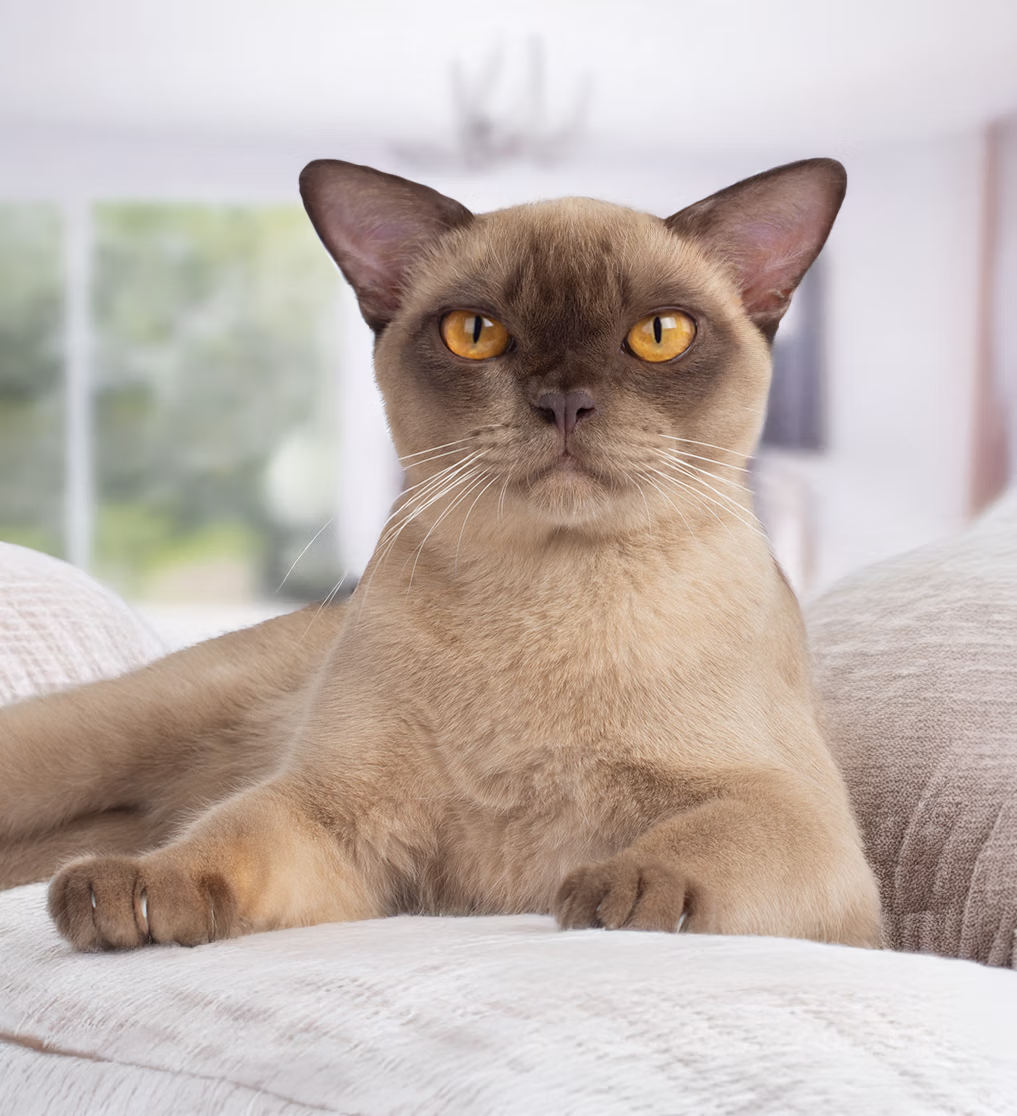
The Burmese cat is a breed for people who are looking for more than just a beautiful pet. They want a truly involved, intelligent, and affectionate companion. The breed is valued for its rare combination of striking appearance, lively character, emotional closeness to people, and its natural ability to become a real part of everyday family life.
This is a cat that does not simply notice your mood. It lives alongside you in a deeply engaged way. Burmese cats often want to stay close, observe, follow you around the house, take part in daily routines, and remain in constant contact with their family. That is why many owners speak of the Burmese not just as a favourite breed, but as an especially close cat in both character and daily life.
Alongside its personality, the Burmese also has a very distinctive appearance. The short silky coat, rich warm colour, expressive golden eyes, and soft body lines create a look that is difficult to confuse with any other breed. Yet the true strength of the Burmese cat lies not only in its beauty, but in the way that beauty is combined with intelligence, warmth, and an exceptional orientation toward people.
Why People Fall in Love With the Burmese
Affection, warmth, and a rare emotional bond
The defining quality of the Burmese cat is not only its appearance, but its character and the way it forms a bond with people. This is a cat that wants to stay close, feel included in family life, and be an active part of what happens at home rather than just an observer.
Burmese cats are highly affectionate and strongly people oriented. They usually form especially close emotional bonds with their owners. They are lively, attentive, and curious while at the same time being deeply warm toward their family. That is why, for many people, this breed becomes not just a favourite, but something truly special.
Part of the Burmese charm is that it combines 2 qualities that rarely come together so naturally. On one side, it is a cat with a bright, active, intelligent, and playful temperament. On the other, it is a very gentle breed that is deeply contact oriented and emotionally close to people. It can be both entertaining and deeply devoted, and this combination is exactly what so often wins people over.
With good care, proper nutrition, and a safe indoor life, Burmese cats often live for a very long time, frequently reaching 17 to 20 years. For many families, choosing a Burmese is not simply a preference for a breed, but a decision about a long and meaningful life together with a cat that gradually comes to hold a very special place in the home.
Personality and Everyday Life with a Burmese
Playful, loyal, expressive, and deeply involved in home life
The Burmese cat combines playfulness, intelligence, curiosity, and a strong attachment to people. Even in adulthood, Burmese cats often retain a lively interest in play, interaction, and everything happening around them. This makes their presence very noticeable in the home. You always feel that the cat is part of what is going on.
This is not a cold or distant breed. Burmese cats need regular contact, attention, and a clear sense of being included in family life. They are sensitive to the general mood in the home and usually prefer to stay close to their people rather than keep to themselves. For many owners, this constant emotional involvement is one of the most cherished qualities of the breed.
Burmese cats tend to be deeply loyal and strongly attached to their family. They often like to sit close by, sit on their owner's lap, sleep pressed against their person, watch daily activities, follow their owners from room to room, and take part in everyday routines. At the same time, each cat is a unique individual with its own temperament, habits, and preferred level of activity. This means there can be noticeable differences in personality even within the same breed.
One of the most distinctive traits of Burmese cats is their long lasting playfulness. They frequently keep a young and energetic spirit for many years. This does not mean they are constantly hyperactive, but they usually enjoy interaction, movement, toys, and being involved in what is happening in the home. In a house with a Burmese, it is rare to feel that the cat is living a completely separate life.
When it comes to vocal communication, Burmese cats are generally softer and quieter than their Siamese and Oriental relatives. They can be quite expressive, but they tend to use their voice when they have something specific to communicate rather than vocalising constantly. Their voice is usually described as soft and pleasant.
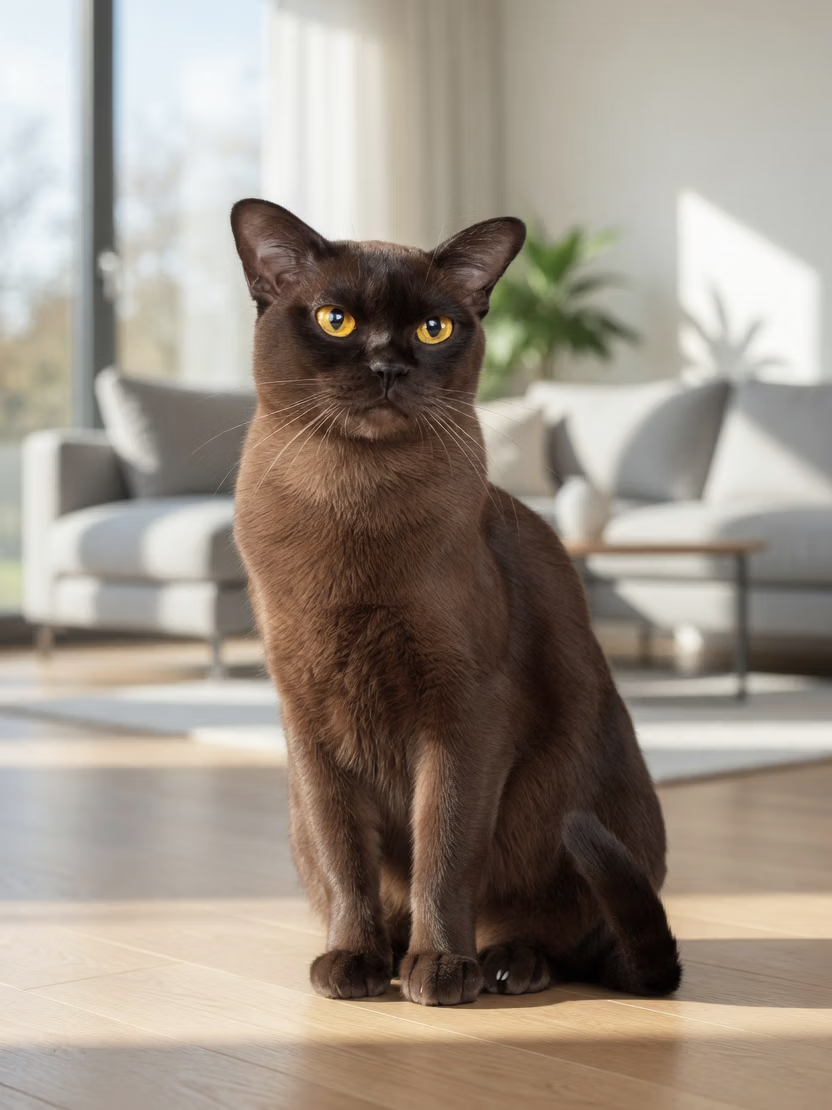
Burmese cats generally integrate very well into family life with adults, children, and other pets, provided they have been raised in the right environment and properly socialised from an early age. This is a highly social breed. Loneliness or an emotionally limited environment does not suit them as well as a home full of interaction, attention, and involvement.
Is the Burmese Cat Right for You?
A people oriented cat for homes that value closeness and interaction
The Burmese cat is an excellent choice for people who want an affectionate, social, and highly people oriented indoor cat with a vivid personality. This breed is ideal for those who value constant presence, warm physical closeness, and active participation in everyday family life.
Burmese cats thrive in homes where they receive regular interaction, attention, and a genuine sense of belonging. When raised in the right environment and properly socialised from an early age, they usually adapt very well to life with adults, children, and other pets. For many owners, the most rewarding part of living with a Burmese is how naturally and completely the cat becomes part of the family.
At the same time, the Burmese is usually not the best choice for people who prefer a highly independent, distant, or outdoor oriented cat. The real strength of this breed lies in its need for closeness, contact, and involvement in home life. If you are looking for a cat that does not simply live in the same house, but truly becomes a member of the family, the Burmese can be an outstanding match.
Care and Lifestyle
Burmese Cat Wellbeing: Emotional Connection and Indoor Life
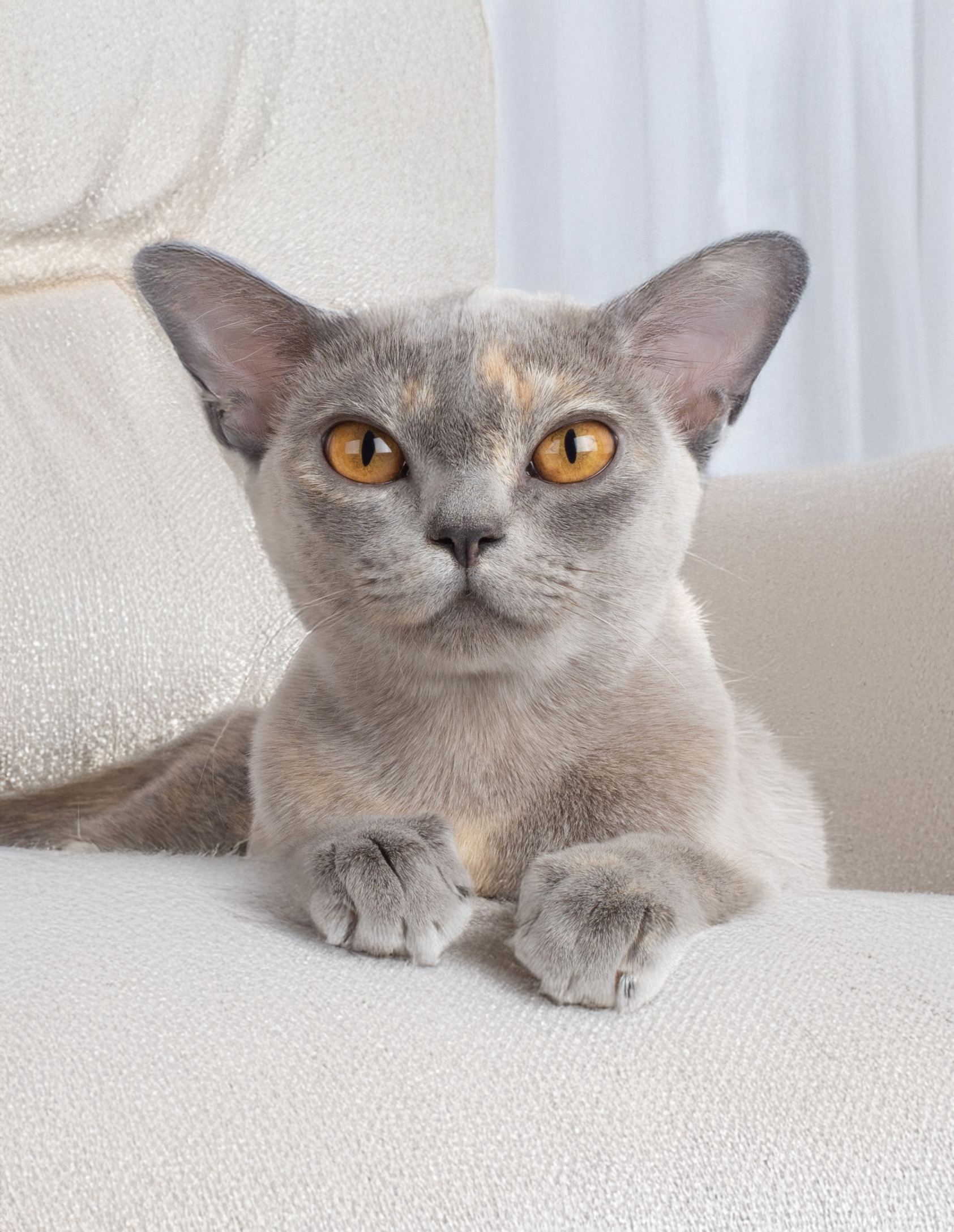
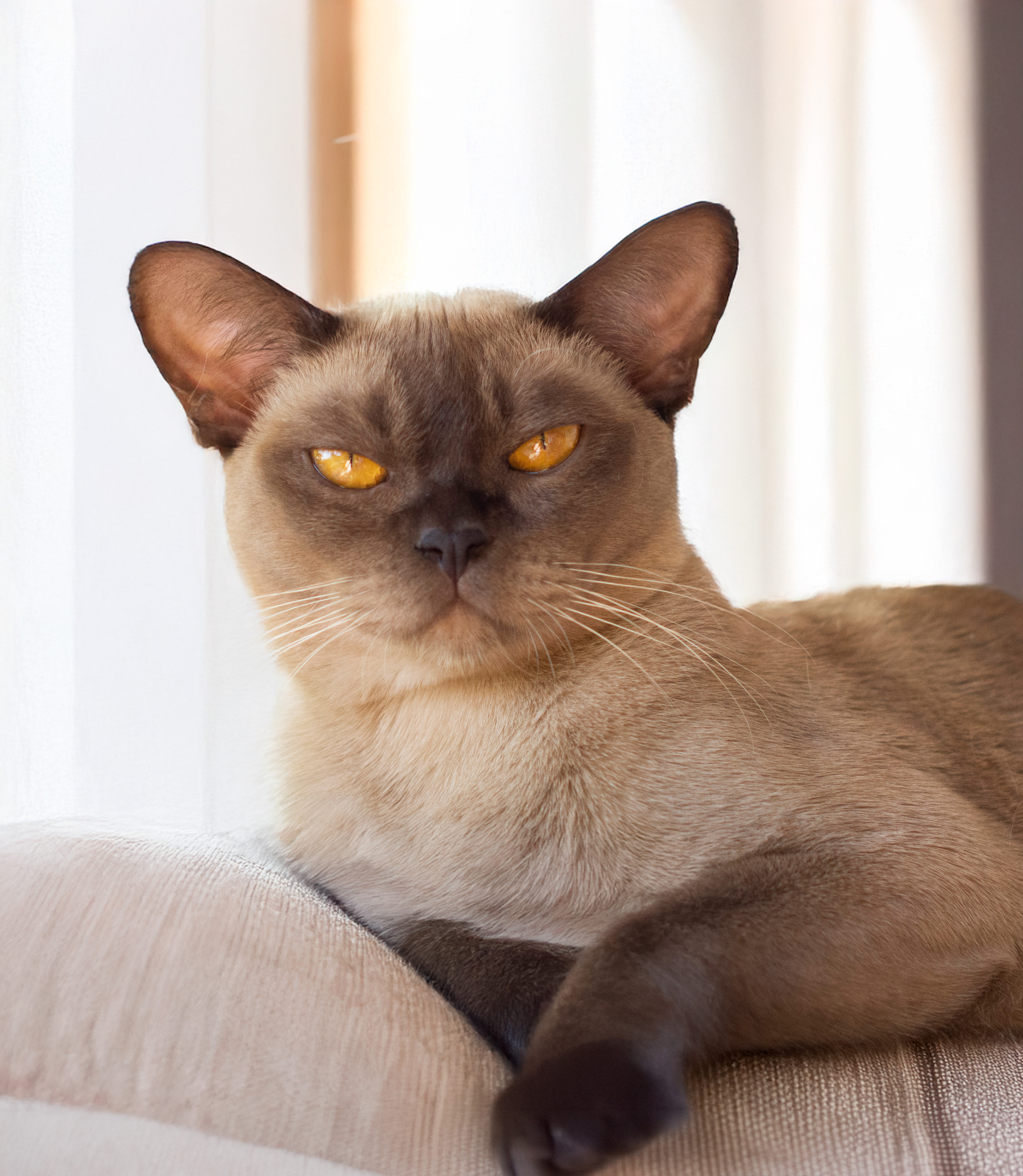
The Burmese cat is not a difficult breed to care for, but its wellbeing depends on more than just basic grooming and feeding. It thrives in a good home environment with regular human contact, high quality nutrition, and a safe indoor lifestyle. This is a breed that feels happiest when it is fully included in family life rather than left on the sidelines.
The short, silky coat of the Burmese is easy to maintain and requires minimal grooming. What truly matters for the comfort and happiness of this breed is much more than coat care. Emotional stability, a predictable daily rhythm, proper nutrition, and consistent daily attention from the family play an equally important role. For the Burmese cat, overall wellbeing is shaped not only by food and physical care, but also by closeness, involvement, and regular interaction with people.
Because of its trusting nature and strong orientation toward people, the Burmese cat is usually best suited to indoor life. It has limited interest in independent outdoor exploration and is much happier in a safe, calm, and well organised home environment than in a free roaming outdoor lifestyle.
European and American Burmese
2 breed types with distinct standards, expression, and overall impression
It is important to understand that the European Burmese and the American Burmese are 2 distinct breed types. Each has its own appearance, expression, and overall breed impression.
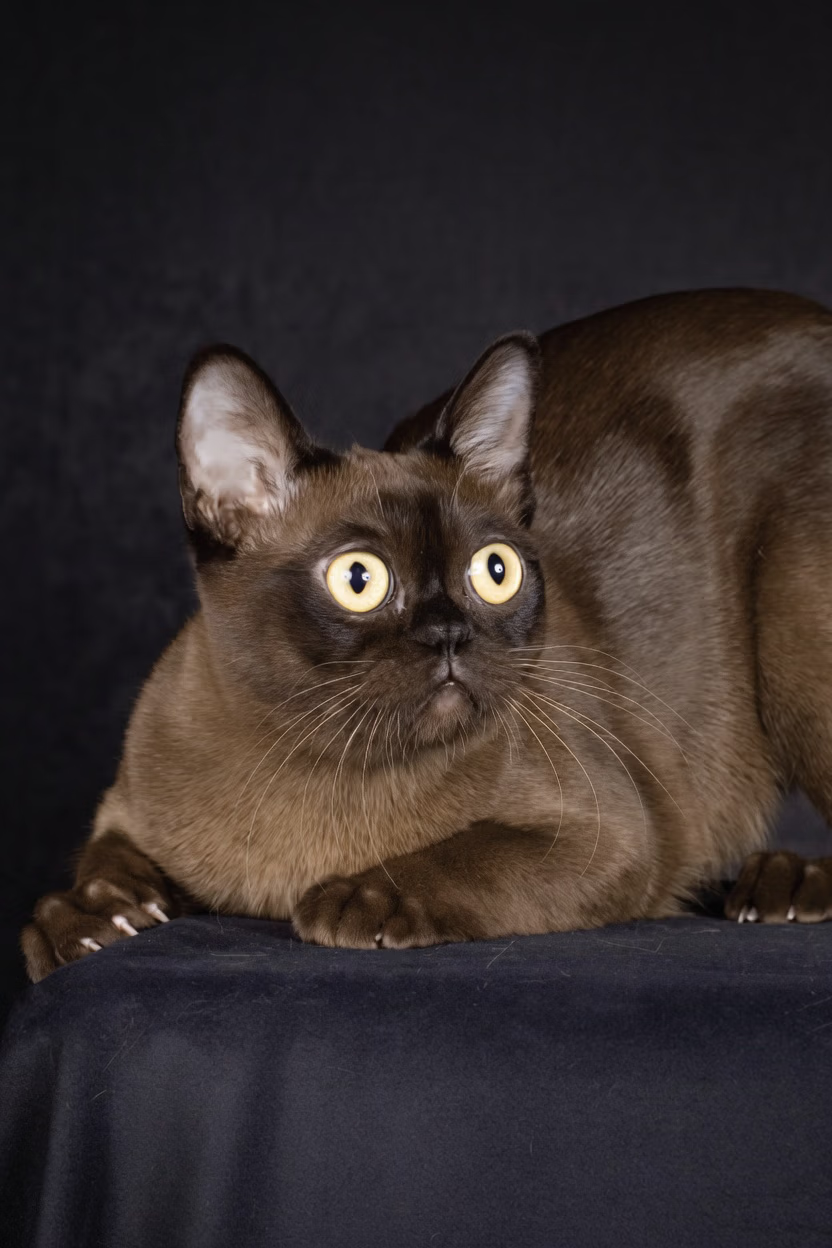
According to the classical standards, the European Burmese is more elegant and elongated in type. It has a longer body, finer lines, a wedge shaped head, and a more oriental expression. The American Burmese is usually more compact, heavier in build, and more rounded in its features. These differences affect not only the silhouette, but also the overall visual impression the cat creates.
At the same time, no breed remains completely static. Cat breeds continue to develop and improve through the work of dedicated breeders. The European Burmese has also changed over the past 20 years. The head has become rounder than before, moving somewhat closer to the American Burmese type, while still retaining the oriental eye shape, medium to large ears, and the wide set of the ears, unlike the small ears of the American Burmese. The body has also become stronger and more substantial.
Today, certain details of type are regarded as especially desirable in the modern European Burmese. A more even coat length along the entire body is considered an advantage, with the coat on the back near the tail ideally remaining as short as on the front part of the back, and without noticeably longer coat on the belly. The ears should not point straight upward, but rather be set outward at an oblique angle, which contributes to a more refined and harmonious expression. At Royal Esprit, we regularly attend FIFe cat shows, present our Burmese cats, and listen carefully to the opinions and recommendations of respected felinology judges. This is an important part of how we continue refining type in our breeding programme.
For this reason, it is important for future owners to understand not only the classical differences between the European and American Burmese, but also how the modern European type continues to evolve through dedicated breeding work. At Royal Esprit we regularly participate in international FIFe shows and carefully consider the recommendations of respected felinology judges as part of our ongoing commitment to refining type.
Why Early Development and the Breeder Matter
Temperament, socialisation, and the first weeks shape the future cat
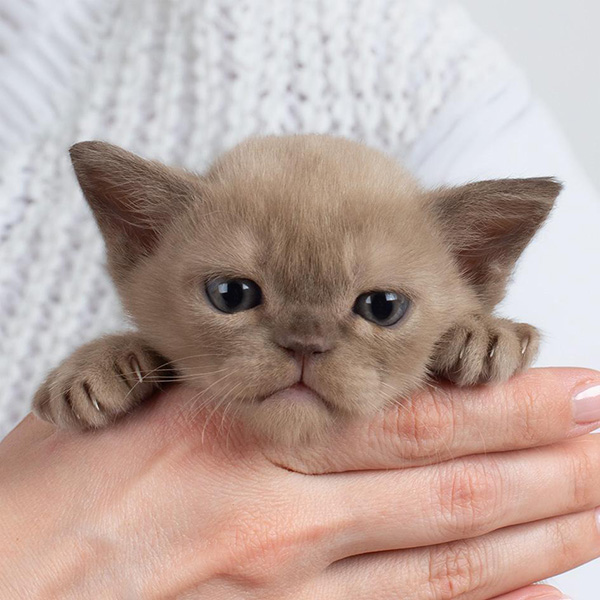
The Burmese cat is a breed in which not only type and pedigree matter, but also temperament, early socialisation, and the way a kitten is raised in its first weeks of life. Because Burmese cats are so strongly oriented toward people and emotional bonding, the quality of early upbringing has a particularly significant impact in this breed.
For a Burmese kitten, it is essential to grow up in the right environment, with constant human contact, calm development, good nutrition, and close observation in the earliest stages of life. This is the period when emotional stability, openness to people, confidence, and the ability to adapt easily to a new family are largely formed.
That is why a responsible cattery is especially important for the Burmese cat. A good breeder pays attention not only to appearance and pedigree, but also to health, temperament, living conditions, early development, and the right start for the kitten in its new home. In this breed, the quality of the breeder truly plays a major role.
History and Origin
From Wong Mau to 2 distinct Burmese breed types
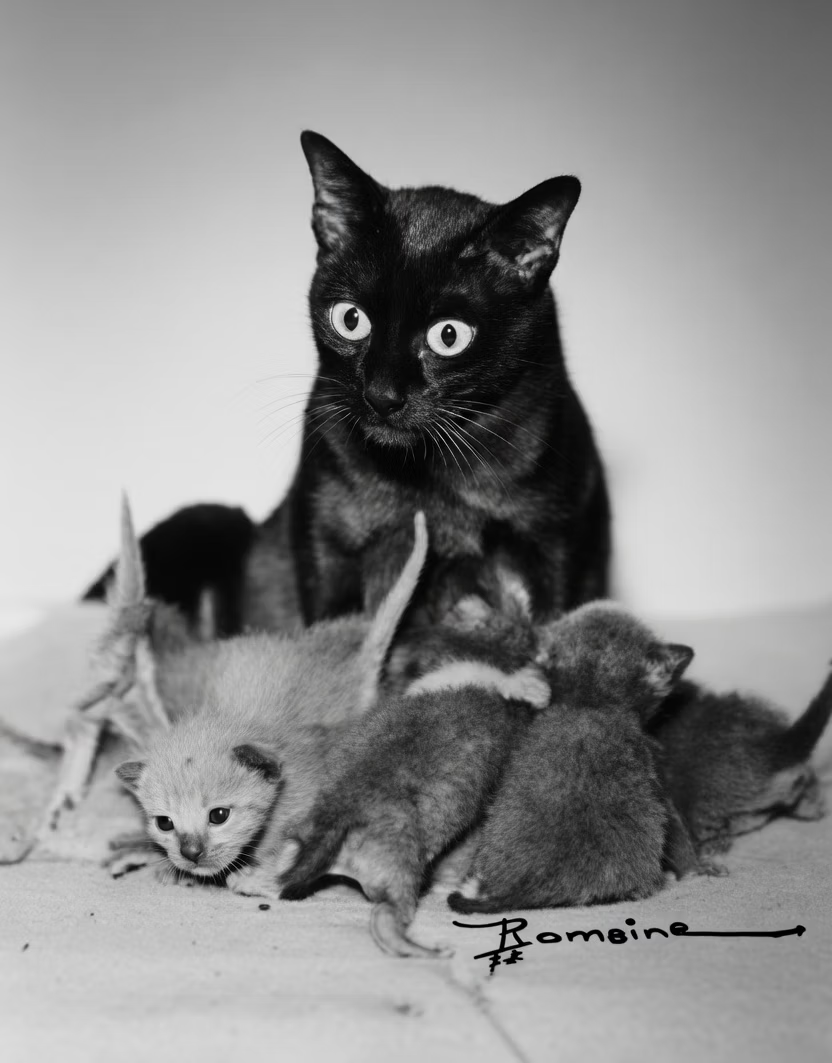
The history of the Burmese cat matters because it helps explain how the breed was formed and why there are now 2 different standards, the European and the American. The modern history of the breed is generally traced back to Wong Mau, a cat that arrived in the United States in 1930 and became the foundation of further breeding work.
It was the work with Wong Mau and the breeding that followed which helped establish the Burmese as a distinct breed. In the decades that followed, development in the United States and the United Kingdom gradually led to the formation of 2 different breed directions. Later, the breed spread across Europe and continued to develop further in Australia and New Zealand.
Today, when people speak about the Burmese, it is important to understand that the name may refer to 2 different breed types. For European catteries and for the FIFe system, the defining type is the European Burmese, with its own standard and its own breed identity.
The Next Step
Choosing the right breed matters most when it leads to the right breeder
If, after learning more about the breed, you feel that the Burmese cat is a good match for your home and your way of life, the next step may be to explore our kittens or learn more about our cattery. Choosing the right breed becomes truly meaningful when it is followed by choosing the right place your future kitten comes from.